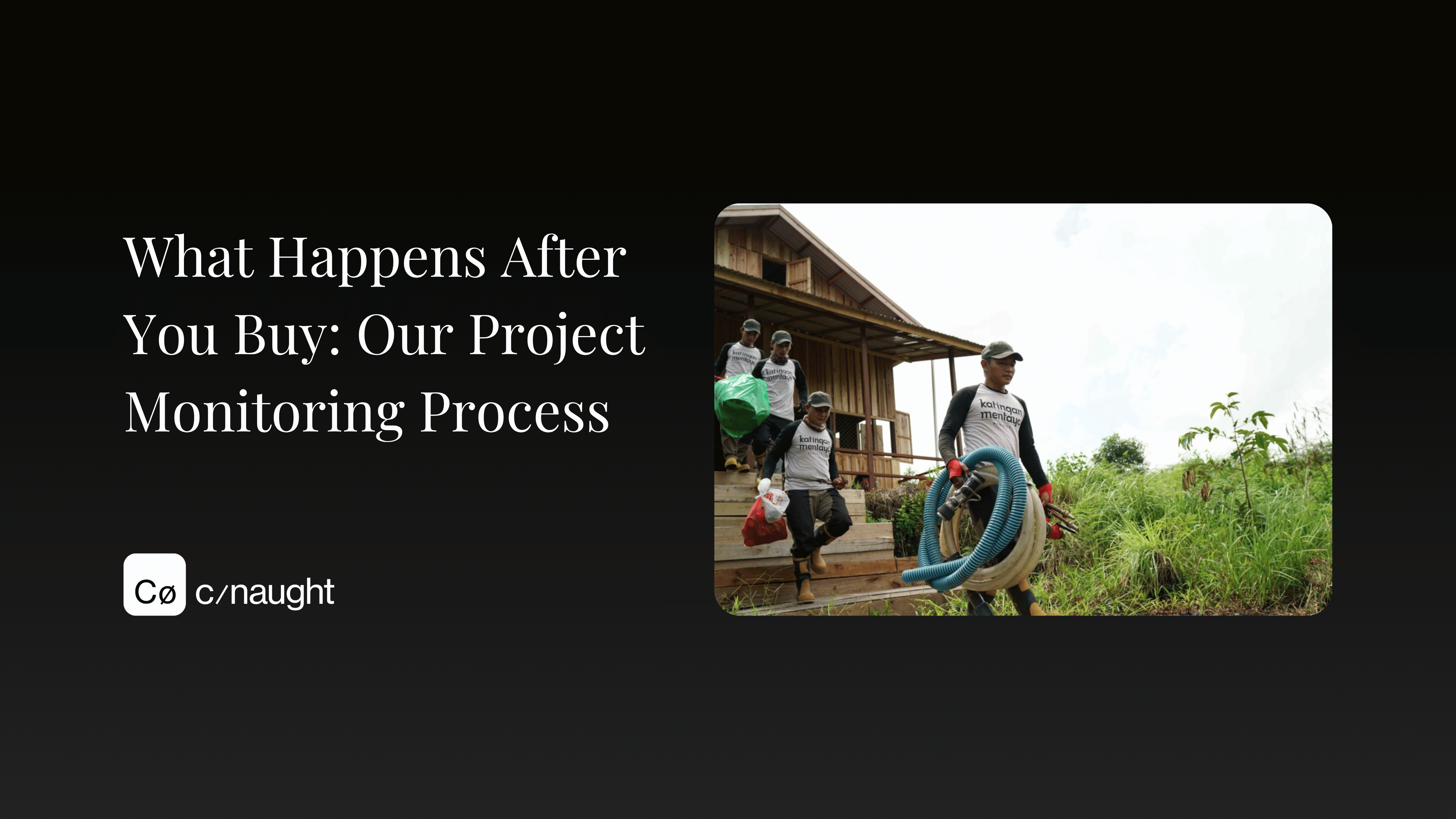
Before a project is included in our portfolios, it goes through our rigorous 7-step due diligence process. Fewer than 4% of projects on the market are eligible, and our science team reviews each one’s methodology and risks directly. However, projects are constantly changing so our work continues after purchase. Forests can burn, and registries and rating agencies keep reviewing projects after their credits are sold.
Read on to learn about how we monitor projects after purchase, using a recent example: the wildfires that reached the Katingan Mentaya project in Borneo this September.
Why carbon projects need monitoring after purchase
Despite rigorous due diligence and monitoring safeguards, every project in the carbon market carries risk, as with any market. In nature-based projects, that carbon is stored in trees, soil or peat, and a fire or drought can release some of it. Technology-based projects can lose their financing, run into equipment problems or remove less carbon than planned, which can delay or reduce the credits it delivers. Registries can also suspend or cancel credits if a problem comes to light at any type of project.
Most buyers don’t have time to track every project they hold. We monitor projects after purchase and alert customers to any developments that might affect their credits, so their sustainability disclosures stay accurate.
Our project monitoring process
When something happens at a project in our portfolios, our science team follows the below steps:
- Monitor for events: We follow news, registry updates and rating agency changes for every project in our portfolios.
- Check the data ourselves: We review independent data like satellite imagery or other remote sensing data.
- Contact the developer: We ask the developer directly what happened, what they’re doing about it and how they’ll report it to the registry.
- Alert affected customers: We email every customer who holds credits from the project with a short update on what happened and what it means for their credits.
- Follow up: We track the project’s formal assessment and share the final numbers with customers once the project reports them.
An example: Katingan Mentaya during the 2026 Borneo fires
Katingan Mentaya (VCS 1477) protects 149,800 hectares of peat swamp forest in Central Kalimantan, Indonesia, and many of our customers hold its credits. Most of its carbon is stored in peat, which only burns once it dries out. 2026 is a strong El Niño year, which dries out Borneo’s peatlands. About 202,000 hectares burned across Indonesia from January to July, and Central Kalimantan moved to emergency response status on August 31.
What we did:
- Checked the data: When the fires reached the news, we checked NASA FIRMS fire data for the project area. It showed a few small fires inside the project boundary that were put out within three days. Satellite hotspots show where fires burned, so they can’t tell us how much forest was lost. As Rachel put it, “A forest can burn without being a complete loss or even a majority loss.”
- Contacted project developer: Our team got in touch with the project developer, Permian Global and learned that their crews had contained a fire at the southwest corner of the project. Prior to the dry season, the project had been prepared and built 112 canal blocks and dams and 559 fire bore wells to keep the peat wet. It also runs 18 to 22 patrols a day and keeps trained village fire teams on call. Any fire inside the boundary triggers a damage assessment, which the project reports to the Government of Indonesia and to Verra.
- Alerted customers: We emailed every customer holding Katingan credits with an update of our satellite check, what Permian told us, and that their credits were unaffected.
- Follow up: The burned area inside the boundary hasn’t been published yet. We’ll share it with Katingan customers once the project reports its assessment to Verra.
What happens to your credits if a project loses carbon
Under Verra’s rules, which cover Katingan and others:
- Issued credits stay valid: Credits already issued, sold or retired are not cancelled by a later loss.
- Losses come out of future credits: Any loss is measured and deducted from the project’s future issuances.
- The buffer pool covers the rest: If a project’s net position for the period is negative, Verra cancels credits from its buffer pool, a reserve each project contributes to. Katingan contributes 10% of its credits.
For CNaught customers, we go one step further by backing every purchase with the CNaught Guarantee. If credits bought through CNaught are cancelled by their registry or suspended for more than a year within three years of purchase, we replace them with high-integrity credits at no extra cost, subject to the program’s terms.
How monitoring connects to our due diligence
Our due diligence tells us which risks to watch for each project. For Katingan, the main risk was durability, since a fire could reverse some of its emissions reductions. In our review, we found that the project has invested heavily in fire prevention, and we believe that keeps its fire risk low. This September’s fires inside the boundary were small and contained within three days, which aligns with our take. Our science team also found that in past fire seasons, the project reported its losses, deducted them from its crediting and used buffer credits where needed.
We also spread every portfolio across project types and regions, so a problem at one project affects only part of a customer’s credits.
Ask your carbon credit provider about their plan
For any provider you purchase carbon credits from, make sure to ask: “What is your monitoring plan and risk mitigation plan if there’s an unforeseen disaster?” They should be able to explain who watches the project, how quickly they contact the developer, how you’ll hear about it, and what happens to your credits if the carbon impact is affected.
If you’d like to learn more about how we monitor the projects in your portfolio, talk to our team.